Russian visa rules changed in 2026: what is different and what stays the same
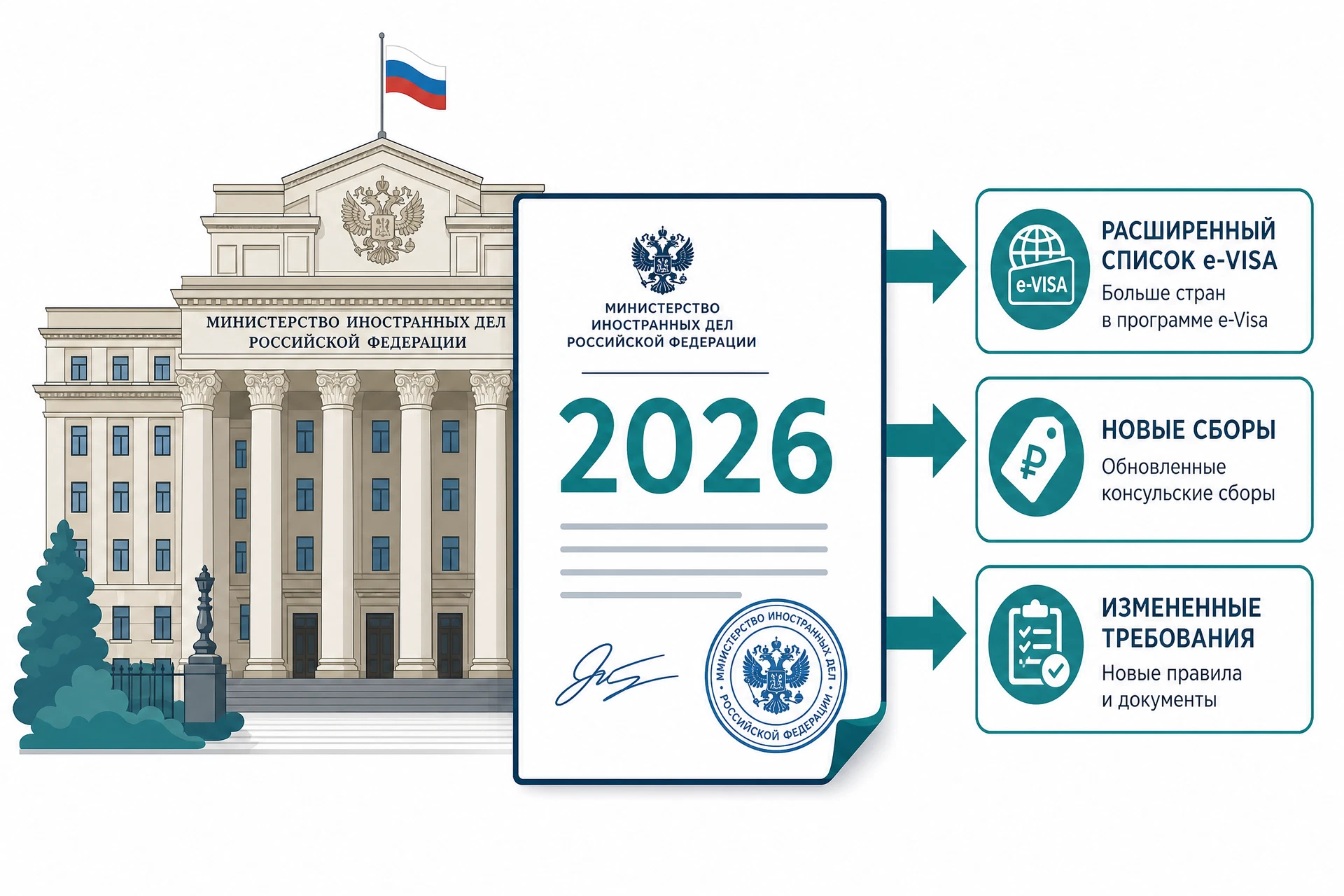
Short answer
The published MFA-backed snapshot lists citizens of 65 states as eligible for the unified eVisa. Current validity is 120 days from issue and the permitted stay is up to 30 days. Applications are accepted 86 to 4 days before expected entry and decisions are issued within 4 calendar days.
Current rules verified from the Russian MFA
The central Russian MFA e-Visa portal is the controlling source used for this summary. Local consular pages may retain older wording, so always check the central portal immediately before applying.
Eligibility and permitted stay
The published snapshot contains 65 eligible states. The current visa is valid for 120 days from issue and permits 1 entry with a stay of up to 30 days.
- Application window: no earlier than 86 days and no later than 4 days before expected entry
- Processing: no more than 4 calendar days from submission of the complete application
- Purpose: use a purpose accepted by the current official application portal
Use approved checkpoints
Entry and exit with an e-Visa are permitted only through border crossing points included in the current Government-approved list linked from the official MFA portal.
Documents for the e-Visa
The published eVisa rule does not require an invitation. Applicants must follow the portal's current passport, image, insurance and application instructions.
Practical impact
Use the official portal directly and rely on the requirements shown for your application. Do not assume that requirements for a consular visa also apply to the e-Visa.
Application timing
Submit the application within the official 86-to-4-day window. The permitted stay begins on entry, and both the arrival and departure dates count as calendar days.
Important limitations
- The eVisa currently permits 1 entry
- The permitted stay may not exceed 30 days within the 120-day visa validity
- Entry and exit are limited to approved border crossing points
- The e-Visa is not intended for work, study or other purposes outside the official list
- There is no routine extension; statutory exceptions are limited
Official sources
Source: the central Russian Ministry of Foreign Affairs eVisa portal (evisa.kdmid.ru / electronic-visa.kdmid.ru) and the Consular Department of the Russian MFA (kdmid.ru). Published snapshot verified at 2026-09-21T10:09:03.000Z.
Frequently asked questions
How much does the e-Visa cost?
The applicable amount is displayed and paid on the official MFA application portal. Check the portal at the time of application rather than relying on a fixed amount in a guide.
Is the e-Visa available for all countries?
No. The published snapshot contains 65 eligible states. Eligibility is based on citizenship and the passport used for the application.
Do I need an invitation for the e-Visa?
The published eVisa rule does not require an invitation.
Where can I see the effective history of the 120-day validity and 30-day stay rules?
Use the Rules history endpoint and evidence links; they preserve both sides of each effective-date boundary.
Official sources
- Russian MFA (mid.ru)— Ministry of Foreign Affairs — official visa policy and consulate directory
- e-Visa portal (evisa.kdmid.ru)— Official unified electronic visa application system
- Consular Department (kdmid.ru)— Consular services, appointment booking, and document legalization
Always verify current requirements with official sources before applying or travelling.
RussianVisa.co is an independent guide and not a government body. Russian entry rules change frequently — always confirm the current requirements with the official Russian Ministry of Foreign Affairs and the consulate that serves your country before you book or travel.

Experienced travel journalist covering Russia and the CIS region for over 10 years, specialising in safety and logistics.