e-Visa vs standard visa: which actually saves more time and money?
Short answer
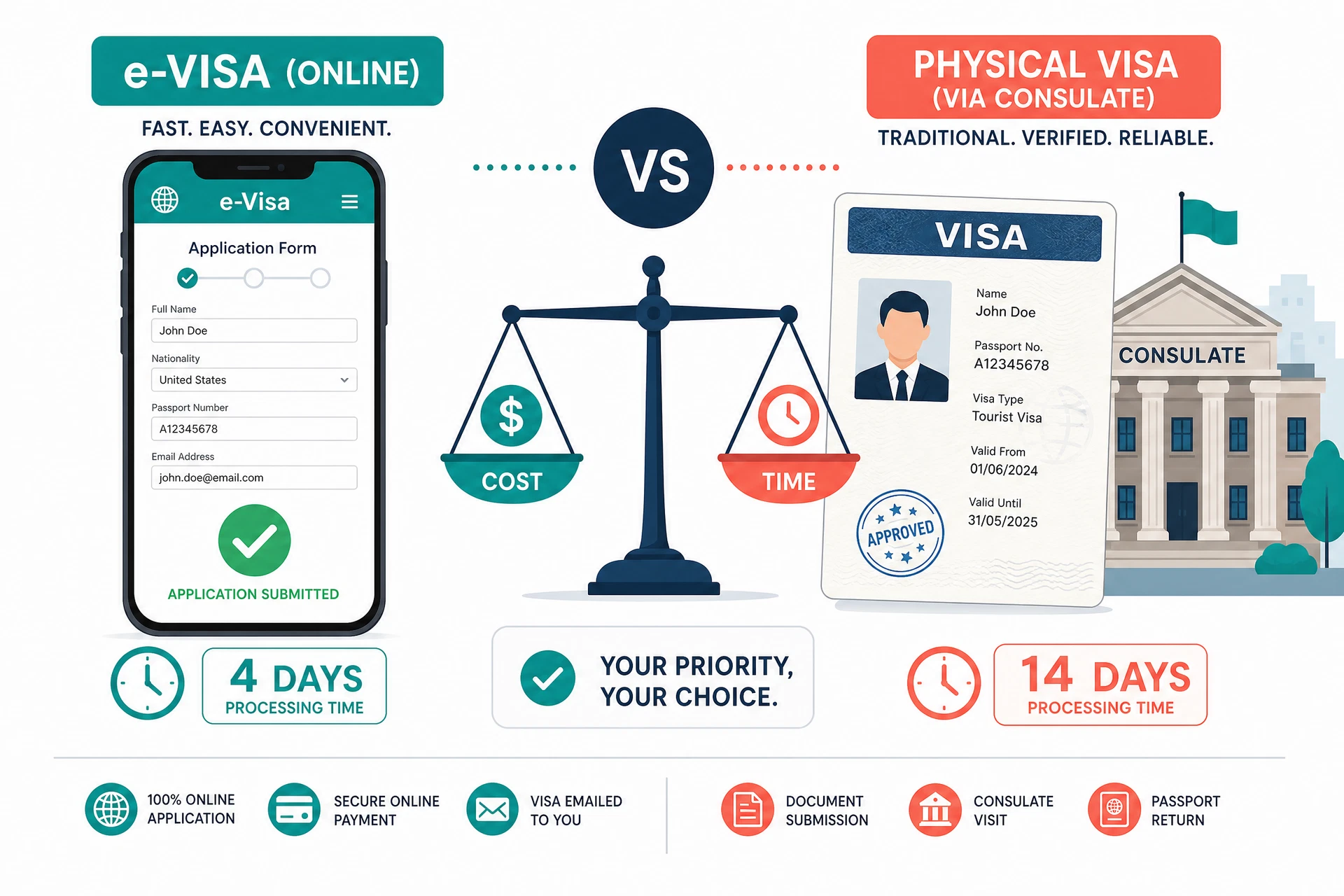
The Russian unified eVisa currently permits 1 entry for citizens of 65 eligible states. It is processed in no more than 4 calendar days, is valid for 120 days from issue and permits a stay of up to 30 days. The published eVisa rule does not require an invitation. The applicable fee is shown on the official MFA portal. Use a consular visa when the eVisa conditions do not fit.
The short answer
If your passport is on the published 65-state eVisa list and the trip fits 1 entry, the 30-day stay limit and an eligible purpose, the eVisa is the online route. The published eVisa rule does not require an invitation. If those conditions do not fit, use the relevant consular visa.
Head-to-head comparison
| Factor | e-Visa | Standard tourist visa |
|---|---|---|
| Total cost | Applicable fee shown on the official portal | Varies by nationality, visa type and place of application |
| Processing time | No more than 4 calendar days | Varies by consulate and visa type |
| Maximum stay | 30 days | Depends on visa type |
| Entries allowed | 1 entry | As stated on the issued visa |
| Invitation required? | No | Follow the responsible mission's supporting-document rule |
| Consulate visit? | No — fully online | Yes (VFS Global or embassy) |
| Biometrics? | Follow the official portal instructions | Follow the responsible consulate's instructions |
| Entry points | Government-approved e-Visa checkpoints only | International checkpoints permitted for the visa type |
| Eligible countries | 65 states | Depends on nationality and visa rules |
| Extension possible? | No routine extension; statutory exceptions only | Depends on visa type and legal grounds |
How to verify the current cost
Fees can change and consular charges vary. Use the amount displayed in your application on the official MFA portal for the e-Visa and the responsible Russian consulate's official page for a consular visa.
| Cost component | e-Visa | Standard visa (India) | Standard visa (Germany) |
|---|---|---|---|
| Invitation letter | $0 | $19 | $19 |
| Government/consular fee | Shown on official portal | Check responsible consulate | Check responsible consulate |
| VFS/visa center fee | $0 | $30 | €29 (~$32) |
| Photos + prints | $0 | ~$5 | ~$10 |
| Total | Shown before payment | Depends on official local fees | Depends on official local fees |
| Time invested | 20 min online | Half day (VFS visit) | Half day (VFS visit) |
When the e-Visa is the clear winner
- Your trip fits the published 30-day stay limit
- You want to avoid the consulate/VFS entirely
- Your schedule fits the published 4-day processing limit and application window
- Your trip fits 1 entry
- Your country is on the eligible list
When you need the standard visa
- Your trip exceeds the published 30-day stay limit
- You need more than the published 1 entry
- Your country is not e-Visa eligible
- You are travelling for work, study or another purpose not permitted for the e-Visa
Common mistakes when choosing
Counting days wrong
The 30-day permitted stay counts from the day you enter Russia. Arrival and departure each count as a calendar day, and the stay must also end before the eVisa expires.
Extension is exceptional
The e-Visa is not routinely extendable. The official portal refers to statutory exceptions such as force majeure; travellers who need a planned longer stay should obtain the appropriate consular visa before travel.
Frequently asked questions
How much does the Russian e-Visa cost?
The applicable amount is displayed and paid on the official MFA application portal. The published eVisa rule does not require an invitation. Travellers should verify any other trip costs separately.
Can I convert an e-Visa to a standard visa while in Russia?
No. You cannot change visa type while in Russia. If you need a longer stay, you must exit Russia, apply for a new standard visa from abroad, and re-enter.
Which is faster if I need to travel next week?
The published eVisa decision limit is 4 calendar days, and the application must be submitted at least 4 calendar days before expected entry. Consular processing times depend on the responsible mission.
Do both visa types allow entry at all Russian airports?
No. An e-Visa may be used only at border crossing points included in the current Government-approved list published by the official portal.
Official sources
- Russian MFA (mid.ru)— Ministry of Foreign Affairs — official visa policy and consulate directory
- e-Visa portal (evisa.kdmid.ru)— Official unified electronic visa application system
- Consular Department (kdmid.ru)— Consular services, appointment booking, and document legalization
Always verify current requirements with official sources before applying or travelling.
RussianVisa.co is an independent guide and not a government body. Russian entry rules change frequently — always confirm the current requirements with the official Russian Ministry of Foreign Affairs and the consulate that serves your country before you book or travel.

Technology and travel documentation specialist focused on Russia's electronic visa system and digital border services.